

Model
Object number2007.167.346 a,b
Date1965
MediumPlastic
Credit LineTransfer from George Westinghouse Museum Foundation, Gift of Ed Appleby
DescriptionTwo plastic Skybus models. Each has silver painted body with half white and half blue panels at both ends. On the blue half of the panels is text inside a white oval shape. Each model has one small square piece of velcro on each end. Each model has six windows on both sides of the car and four sets of double wheels on the bottom. Dimensions2.25 x 2 x 5.625 in. (5.7 x 5.1 x 14.3 cm)Inscriptions(a-b)
On the blue half of the panels are the letters "MTS" inside a white oval shape.
Paper tag taped to bottom has text "AUTHENTIC MODEL OF CARS FOR THE / W TRANSIT EXPRESSWAY SYSTEM. / THE FULL SIZE SYSTEM WAS BUILT / AND THEN TESTED FROM 1964 TO / 1967 AT PITTSBURGH'S SOUTH / PARK."
Historical NotesDonated by Ed Appleby to the George Westinghouse Museum who transferred the material to the Heinz History Center when the museum closed in 2007. The Westinghouse Transit Expressway, or "Skybus", was one of Pittsburgh's public transportation initiatives from the 1960s. Conceived during Renaissance I in the late-1950s as an alternative to overcrowding on the city's streets, Skybus was a fully automated, rubber-wheeled, electric vehicle that rode on a steel and concrete guideway. The vehicles could operate on an elevated guideway, at ground level or below street level. If approved, the Port Authority planned to replace the existing light rail trolley routes with a 92-mile, 460 car transit system linking the urban and suburban populations with downtown Pittsburgh at a cost of approximately $740 million. Pittsburgh's fascination with Skybus reached its zenith in the mid-1960s, when federal dollars were allotted to build a 1.77 mile test track in South Park. Construction of the South Park loop began in the fall of 1964 and was completed the following spring. Despite strong support within the Port Authority, the Skybus proposal faced heated political opposition within the City and County governments. Eventually, support dwindled among politicians, and the Skybus initiative was shelved in favor of more practical solutions. Dedicated bus lanes were installed in high traffic corridors. The South, East and Airport busways were constructed. Finally, the completion of the "T" light rail and subway system in the mid-1980s brought Pittsburgh's urban transportation nightmare to an end. Info from: http://www.brooklineconnection.com/history/Facts/Skybus.html
Related institution
Westinghouse
On View
Not on viewCollections


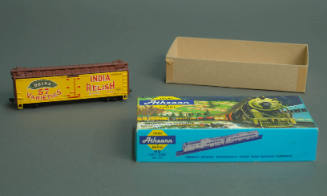
Athearn
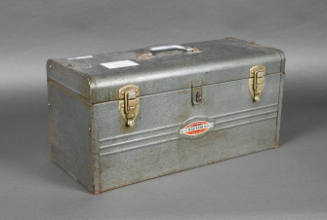
National Cash Register Company